
Checking Criminal History in Provo
A useful Provo criminal records search starts with the question the record must answer. A Provo officer's account belongs to Provo Police. A Provo citation or class B or C misdemeanor belongs at Provo Justice Court once filed. A custody event may appear at the Utah County Jail. A class A misdemeanor or felony moves to Fourth District Court. The Provo search sequence therefore depends on both record type and charge level. Xchange can cover public district and justice court case histories, while MyCase gives an eligible participant free access to that person's own cases.
- Ask Provo Police for the incident or report through its official Police GRAMA channel, especially when the officer narrative is the goal.
- Use the report date, names, location, and any incident number to make the Provo request specific without inventing form requirements.
- Contact Provo Justice Court for a qualifying Provo citation or lower-level case, or use MyCase when reviewing your own eligible case.
- Check Utah County booking records or Fourth District Court when the event involved custody, a class A misdemeanor, or a felony.
- Use BCI Right of Access only for your own fingerprint-linked Utah history. It is not an open public name search.
These Provo channels hold different parts of the same event. A negative result at one Provo office does not erase what another Provo custodian may hold.
Provo's Three-Office Record Trail
Provo City Hall creates an easy wrong-counter problem. Provo Police Records is at 445 West Center Street, Suite 130. Parking matters route through Provo Parking at Suite 140. General city functions may use Suite 500. Provo Justice Court is not in that building at all; it sits at 75 East 1700 South, Suite 100. A person looking for a police report, parking ticket, or criminal citation can therefore visit three different counters for three very different files.
The split is based on custody, not convenience. Provo Police Records maintains law-enforcement reports. Parking staff handle administrative parking matters. Justice Court maintains judicial case records for the matters within its authority. Asking Provo Justice Court for a parking ticket history or asking Police Records for a final judgment will waste time. Before visiting, write down whether the needed item is an incident report, citation, court docket, payment record, or parking notice.
| Provo Record | First Office | Local Location |
|---|---|---|
| Police report or document | Provo Police Records | 445 W Center, Suite 130 |
| Administrative parking ticket | Provo Parking | City Hall, Suite 140 |
| City criminal or traffic case | Provo Justice Court | 75 E 1700 S, Suite 100 |
Provo Police Department Records
Provo Police Records is the Provo source for eligible police reports and documents. The official Police GRAMA request page uses a dynamically embedded CivicPlus or OneBlink form. Source inspection found nine controls but could not reliably identify their labels, required status, an account rule, fee, identification rule, or response time. Those missing Provo details should be confirmed with Records at 801-852-6210 rather than guessed.
The official police request source leads into Provo's electronic records channel.
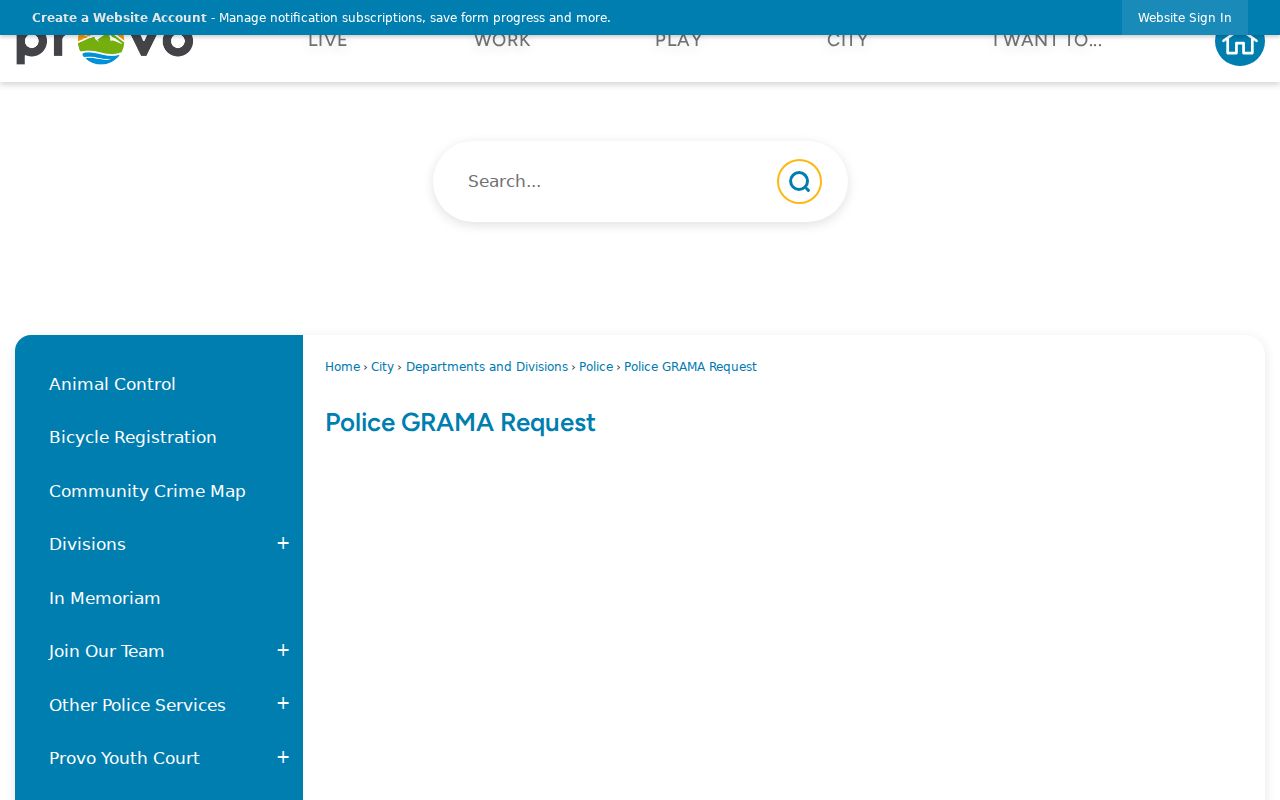
The image confirms the Provo-run route, while the direct records phone and Suite 130 counter remain sensible fallbacks when the embedded form does not expose a needed detail.
Provo also maintains a general GRAMA request overview. Use the police-specific path for a police report, because GRAMA requests work best when sent to the agency that maintains the record.
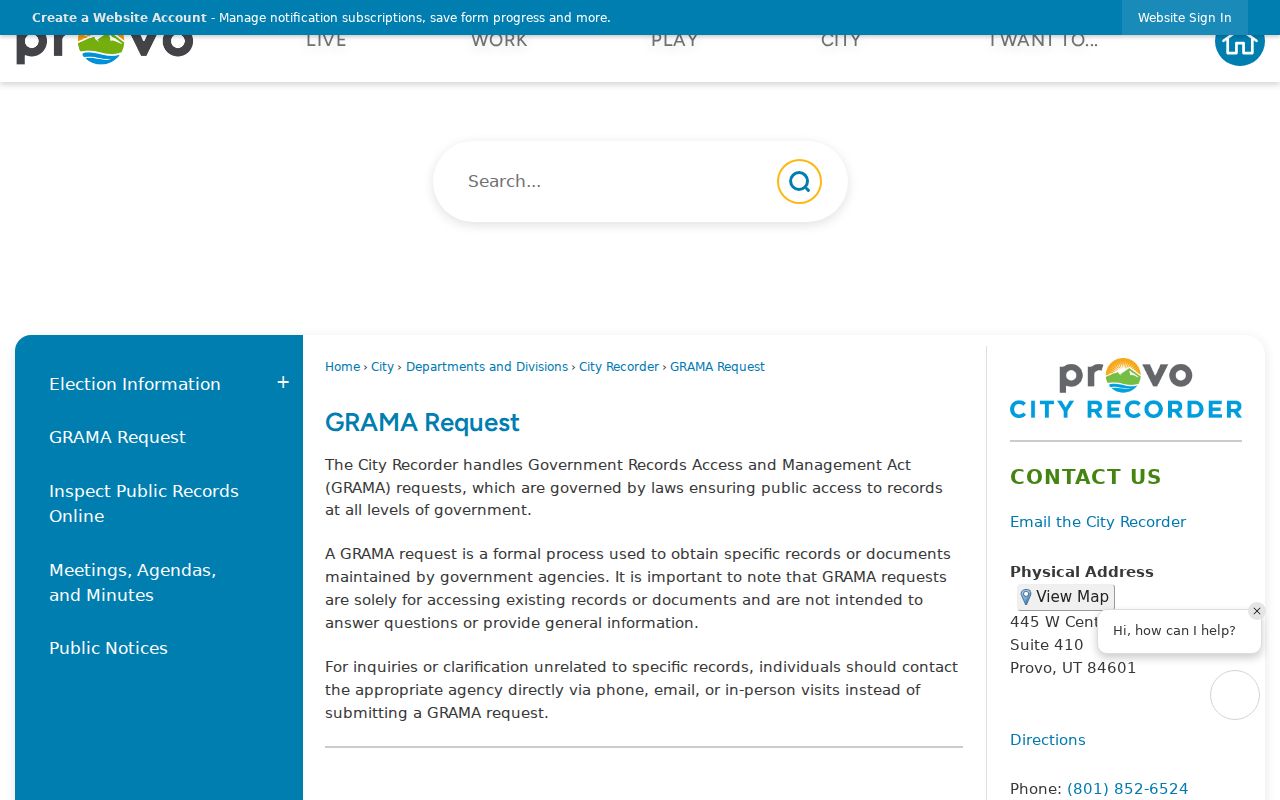
The broader Provo page helps distinguish general Provo city files from police records that belong with the Police Records unit.
Provo Crime Maps Are Not Records
Provo's Community Crime Map can show reported incident geography. It cannot establish that police arrested anyone, that a prosecutor filed a charge, or that a court entered a conviction. Map points are useful for seeing place-based activity and trends. They are not person-level criminal history. A Provo police analyst may use crime and crash patterns to study hot spots and nuisances, but a Provo map viewer should not turn a map point into a claim about a named person.
Provo's separate online Report a Crime or Accident function has another purpose. It submits nonemergency information to police. It does not retrieve an existing Provo criminal record and is not an arrest log. The official incident-reporting source shows that intake route.
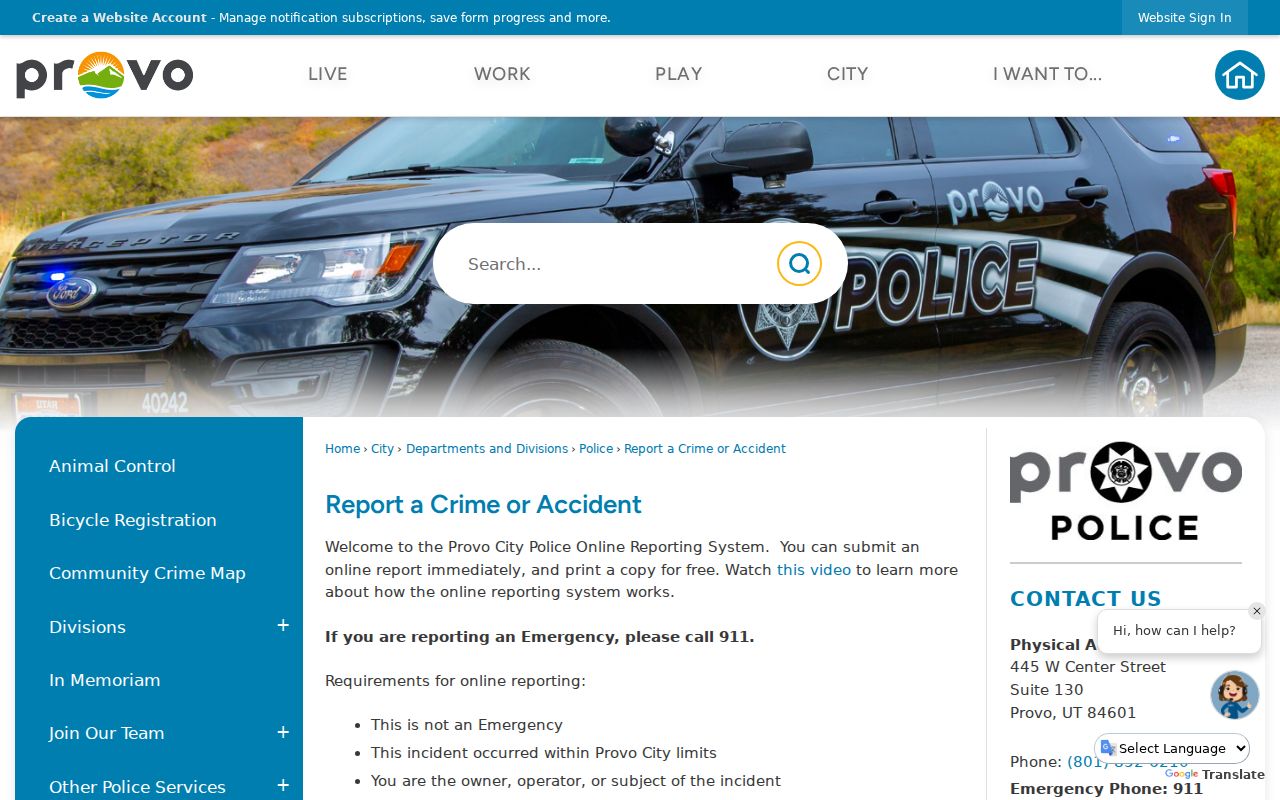
The Provo submission interface is a way to send a new report, while Police GRAMA is the Provo route for requesting an existing eligible record.
Provo Arrests and Bookings
No official Provo city jail or city roster was identified. When Provo Police makes a custodial arrest that reaches county intake, the Utah County Sheriff creates the booking record. The public county search waits twenty-four hours before posting booking information. A citation or other Provo noncustodial event may never produce a county booking, so an absent jail result does not prove that police had no contact with the person.
For recent Provo criminal records, check the Provo channels in sequence. Request the police report from Provo Police. Look for a county booking after the stated delay. Then search the court that has authority over the filed charge. Class B and C misdemeanors and traffic matters may remain in Provo Justice Court. Class A misdemeanors and felonies belong in Fourth District Court. Another custody agency can also explain why a Provo event is not in the Utah County roster. This Provo routing separates local reporting from county custody.
A booking documents intake charges, custody, holds, bail, and release. It does not prove guilt. For the county-level process and custody fields, use the contextual Utah County Arrest Lookup.
Provo's Five-Day Citation Rule
A Provo criminal citation requires a courthouse hearing. The city tells the cited person to contact Provo Justice Court after five days. Failing to address the citation can add fees and may lead to an arrest warrant. That timing creates a practical gap: calling too soon may mean the citation has not reached the court system, while doing nothing can worsen the case.
Many nonmandatory traffic matters may be paid, contested, considered for Deferred Traffic Prosecution, or handled through traffic school if the person qualifies. Payment options include the counter, Utah Courts online, phone at 801-852-6878, and mail. Online, phone, and mailed payments need the case or citation number. Mail a check or money order with that identifier, never cash. These payment routes address an existing matter; they are not substitutes for searching someone else's Provo criminal records.
Note: A missing citation in the first few days calls for a Provo clerk follow-up, not the conclusion that the matter disappeared.
Municipal Court Records in Provo
Provo Justice Court is a full-time Utah justice court. It hears class B and C misdemeanors, traffic cases, and small claims. Its Provo criminal proceedings are recorded and open under court access rules. It does not handle divorce, protective orders, custody, or other county-level civil matters. Judge Steve Schreiner's city court page identifies the Provo authority, but case access still depends on whether the requester is a party and whether the record is public.
MyCase gives an eligible participant access to that person's balances, payments, hearing dates and times, and available documents after registration with a frequently checked email, case number, and government ID. A member of the public looking for another person's Provo case uses Xchange or contacts the clerk. Xchange is a statewide public case system, not a police-report archive.
| Court | Provo Justice Court, 75 E 1700 S, Suite 100 |
|---|---|
| Case Types | Class B and C misdemeanors, traffic, and small claims |
| Party Access | MyCase for an eligible participant's own case |
| Public Access | Xchange, the clerk counter, or a court-record request |
| Case Contents | Charges, hearings, filings, plea, disposition, judgment, and payment entries as applicable |
| Contact | 801-852-6878; weekdays 8 a.m. to 5 p.m. |
Forms Behind Provo Court Records
Every Provo Justice Court case requires an Advisement of Rights, Enhancement, and Right to Counsel Notification, which is also supplied at the first appearance. That form helps document that the person received core procedural information. A Declaration of Financial Status supports a request for city public-defender appointment and is reviewed in open court. It is not a private screening form.
After a case resolves, the Request to Judge form can address a payment-schedule change, a treatment extension, or another order modification. These Provo papers add context to Provo criminal records because a docket line may only name the filing. The underlying form or resulting order shows what relief was requested and whether the judge acted. Provo court entry rules also matter for a visit: weapons and sharp objects stay outside, electronics must be silent, and children or animals are not allowed except service animals.
Where Provo Records Go
A Provo Police report remains with the city even after a prosecutor reviews the event. If the person enters custody, the Utah County Sheriff adds a separate booking file. A city prosecutor may file a qualifying lower-level matter in Provo Justice Court. The Utah County Attorney handles qualifying felony and class A misdemeanor prosecution in Fourth District Court. Court staff enter public case data in CORIS, which can then appear through Xchange after entry.
Record flow: Provo Police › Provo Justice Court or Utah County Fourth District Court › Utah Department of Public Safety, Bureau of Criminal Identification
BCI receives fingerprint-supported arrest cycles and reported outcomes under Utah dissemination law. It does not offer an unrestricted public name search. A person reviewing their own statewide history uses BCI Right of Access with fingerprints, valid identification, an application, and the current fee. That Provo filing path does not turn BCI into public court access. For public prosecution history, stay with the court file. For the officer narrative, stay with Provo Police.
Reading Provo Criminal Record Statistics
BCI's 2024 NIBRS data lists 4,748 offenses for the Provo reporting agency population of 112,763, a rate of 42.11 per 1,000. The total includes 846 person offenses, 2,521 property offenses, and 1,381 society offenses. NIBRS counts offenses known to law enforcement. One incident can contain more than one offense. These are not counts of arrests, defendants, filed charges, or convictions.
The official U.S. Census Provo profile provides demographic context but uses a different population product from BCI's agency denominator.
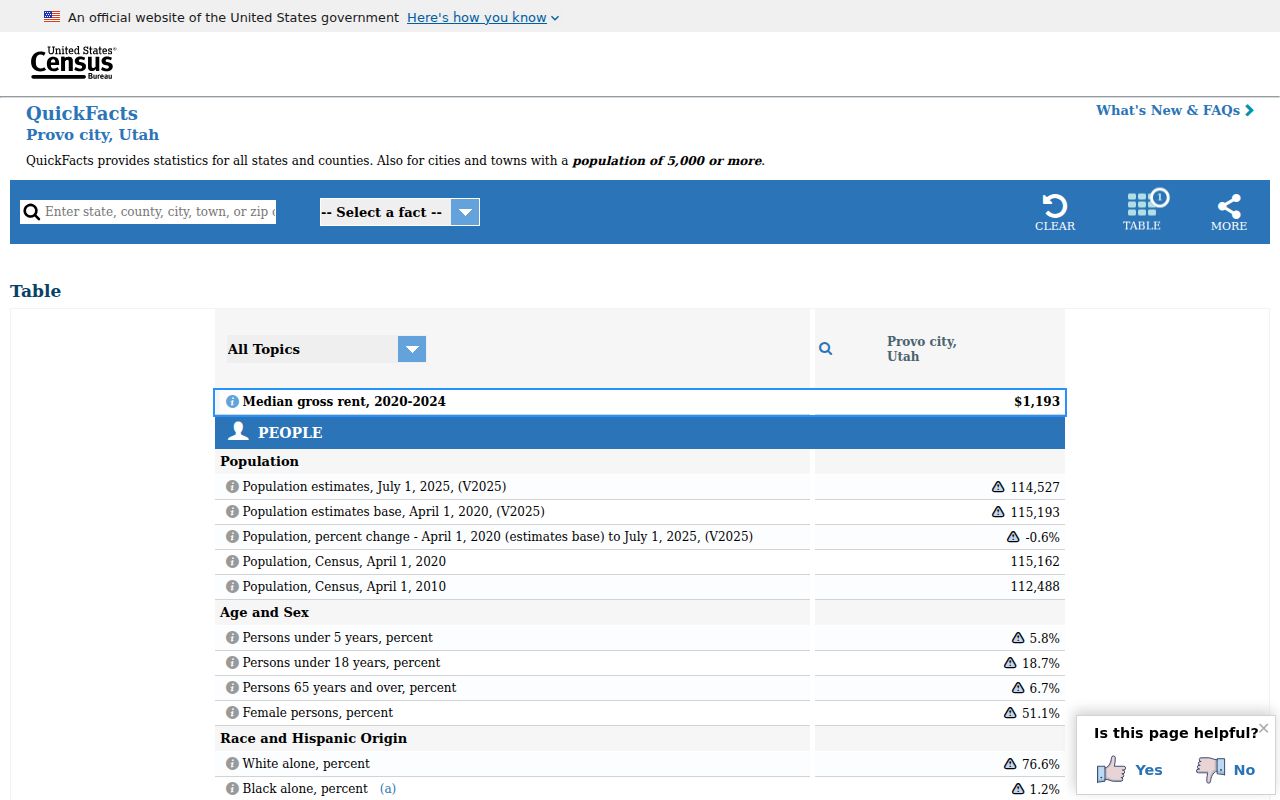
The Census source records a July 1, 2024 city estimate of 115,479. Keep that place estimate separate from BCI's agency population when explaining crime data.
Provo Police Records by District
Provo's five official neighborhood districts are North, East, West, Northwest, and Central. They group many named neighborhoods, but they are not council districts and do not create five separate criminal-record repositories. Police Records remains the custodian for city police reports across them. A district or neighborhood name can still help narrow a request when the street, time, or event details are incomplete.
Local operations also affect what kinds of police records can arise. Warm-weather bicycle patrol focuses on Downtown and the River Trail. Patrol responds around the clock, while named specialties include K-9, traffic and motors, and animal control. Safe Exchange Zones at the front and rear of City Hall are lit and camera-covered. A person seeking video or a report should describe the exact place, date, and event, then ask Police Records which responsive files the city maintains. District context supports a focused request; it does not turn the Community Crime Map into proof about a person.
Public Access Rules in Provo
Police records and court records use related but separate access systems. Provo Police responds under Utah's Government Records Access and Management Act. The agency may classify material as public, private, controlled, or protected and may redact victim, juvenile, investigative, or other restricted details. GRAMA gives a right to inspect public records, but it does not require Provo to create a new compilation or format a record that it does not maintain.
Judicial records follow Utah court access rules. Public Xchange content excludes sealed, expunged, juvenile delinquency, child-welfare, and termination matters. A subject or properly authorized person may have access rights to certain nonpublic agency records under the conditions in Section 63G-2-202. Neither route makes BCI's fingerprint-linked rap sheet an open name-search product.
Key Utah access laws:
Utah Code § 63G-2-201 provides the public inspection right and its limits.
Utah Code § 63G-2-202 governs access by a subject or authorized requester to specified nonpublic records.
Utah Code § 53-10-108 controls BCI criminal-history dissemination.