
Checking Criminal History in Utah County
Start with the kind of event you need to verify. Xchange: Public Case Search covers public Utah County district and justice court case summaries entered in CORIS. A person who is a party to a case can instead try free MyCase. Recent custody belongs in the Utah County Sheriff search, and a personal statewide rap sheet comes from the Utah Department of Public Safety, Bureau of Criminal Identification, or BCI. Utah County criminal history can span all three layers.
Names alone can match the wrong person. Gather the full name, spelling variants, birth date, court or arresting agency, and any case, citation, or booking number before searching Utah County records. Then follow the source record to its outcome.
- Use Xchange for public Utah County district or justice court cases and MyCase for your own eligible case.
- Check the Sheriff’s arrested-person search for a recent Utah County booking, allowing for its publication delay.
- Read the charge history and final disposition instead of treating an arrest or filed charge as a conviction.
- Ask the originating court or agency for an older, missing, certified, or restricted releasable record.
- Use BCI Right of Access when you need your own fingerprint-supported Utah history.
Utah County Has No Single Database
A Utah County criminal record is not one file stored in one place. Utah County police create incident and arrest reports. The Sheriff creates jail booking identifiers, custody entries, charges, holds, a photo, and fingerprints. A prosecutor may then file a complaint or information, and the court creates its own docket and judgment. BCI receives fingerprint-supported arrest cycles and reported outcomes. Each source answers a different question.
The BCI criminal-records page shows the state’s subject-only Right of Access route. The screen below represents that official self-review channel, not a public name search of another person.
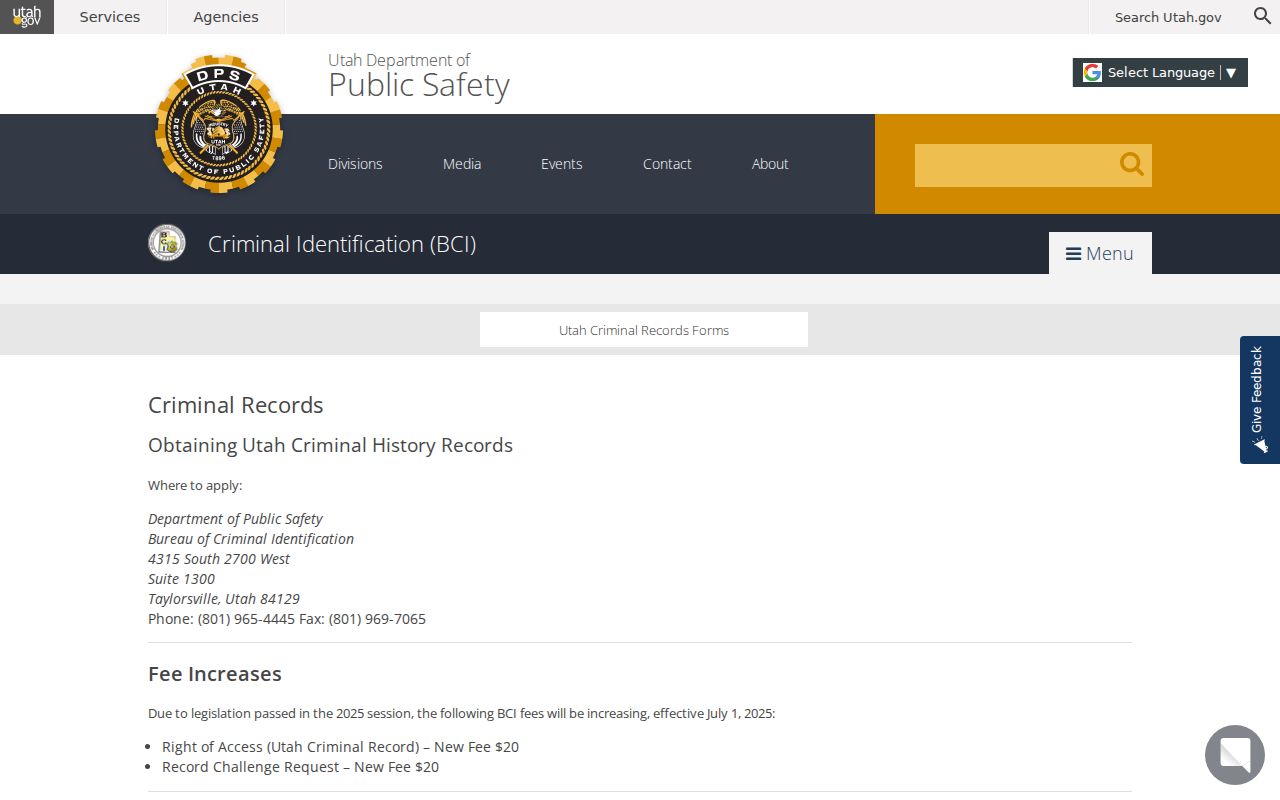
That separation is crucial: a jail entry can prove booking, Xchange can show what was prosecuted, and BCI can compile a fingerprint-supported state history, but no one result supplies every fact.
Utah Official Background Checks
BCI does not offer an unrestricted public portal for searching another person’s statewide rap sheet. A Utah County resident seeking their own Utah record submits a Right of Access application with rolled fingerprints, valid government photo identification, and the current $20 fee. BCI accepts prints taken at its Taylorsville office for this request without an appointment, or prints taken by an official fingerprinting agency. A Utah Driving Privilege Card is not accepted as identification.
The office is at 4315 South 2700 West, Suite 1300, Taylorsville, Utah 84129. It is open Monday through Friday from 8 a.m. to 5 p.m., and its main line is 801-965-4445. Mail payment can use a check, money order, cashier’s check, or an accepted credit card. This Utah County background check is for self-review. Public prosecution research remains a court search.
BCI Right of Access
4315 S 2700 W, Suite 1300
Taylorsville, UT 84129
801-965-4445
Weekdays, 8 a.m.-5 p.m.
Utah County Justice Court
151 S University Ave., Suite 3300
Provo, UT 84601
801-851-7200
Weekdays, 8 a.m.-4:30 p.m.
Utah County Records Split Two Ways
Utah County geography can send a search to the wrong counter. Felony and class A misdemeanor files are held at the Fourth District Court’s Provo courthouse. County class B and C misdemeanors, ordinances, infractions, and traffic matters go to Utah County Justice Court. Booking and agency records sit with the Sheriff at the County Security Center in Spanish Fork. City cases may begin at a municipal police department and move to that city’s justice court.
The Utah County Sheriff’s official site displays the agency route used for jail, records, warrants, and other Utah County criminal history questions.
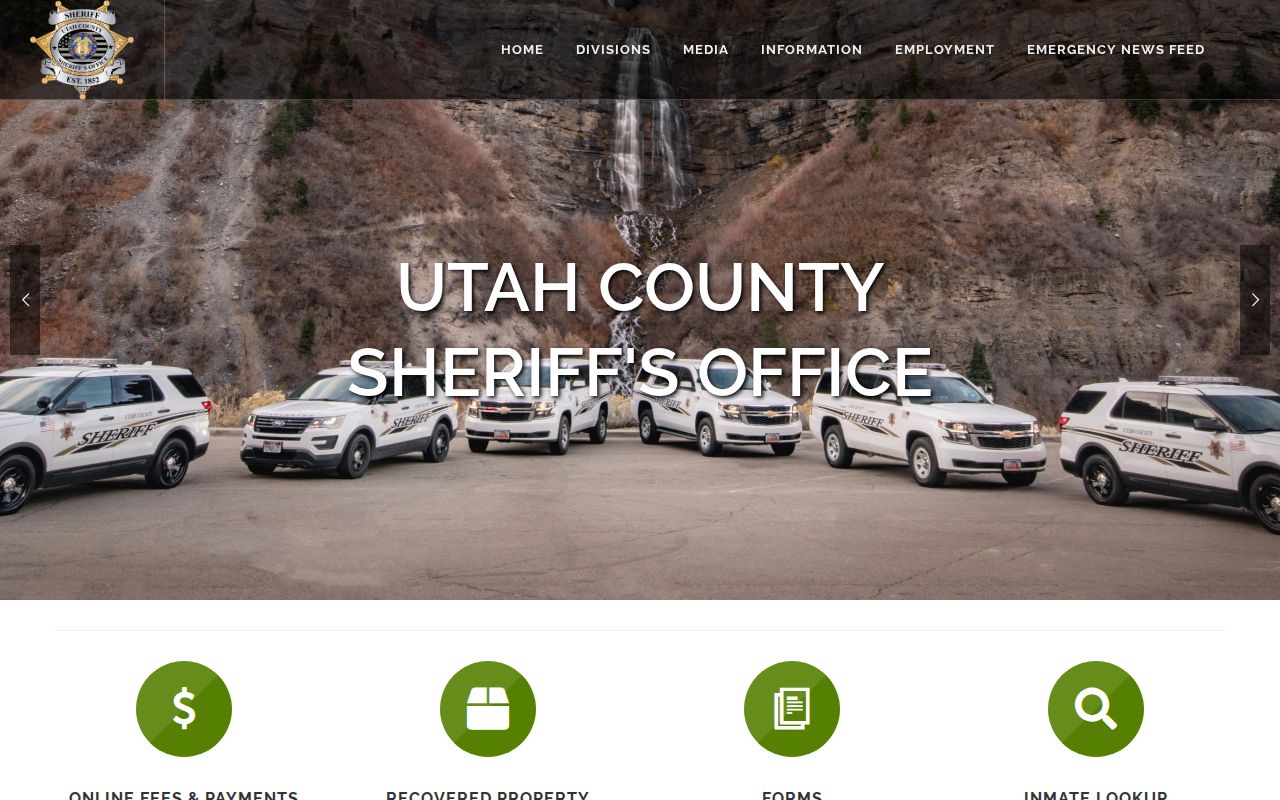
The practical split is simple: ask the creator first. Go to the Sheriff for current custody, the arresting agency for its report, the court for a filed case, and BCI for your own statewide history.
Criminal Record Types
Utah County records document different stages of the same event. A Utah County incident report gives the officer’s account and alleged basis for action. A booking record describes jail intake and release. The prosecutor’s filing states allegations selected for court. The docket then tracks hearings, pleas, rulings, judgment, and sentence. Warrants, supervision records, and registry listings have their own custodians and access rules.
- Booking
- Jail intake that produces custody, fingerprint, photo, charge, hold, and release data. It is not a finding of guilt.
- Disposition
- The outcome assigned to a charge or case, such as conviction, dismissal, or acquittal.
- CORIS
- The Utah Courts Information System where staff enter case data that can appear in Xchange.
- Right of Access
- BCI’s fingerprint-based channel for a person to obtain their own Utah criminal history.
- Expungement
- Restriction or removal from ordinary public inspection, not physical destruction of every record.
Utah County Xchange Search Choices
For Utah County, Xchange serves nonparties who need a public case search. District coverage is generally complete from the end of 1998, but justice court conversion dates vary and older files may be sparse. Online access charges for searches and documents. Free Xchange terminals are available at most district courthouses and at the Utah State Law Library. MyCase is the free, authenticated route for eligible parties to see their own hearings, balances, and documents.
| Channel | Best use | Key limit |
|---|---|---|
| Xchange online | Public statewide district and justice case summaries | Paid account or one-time access |
| Courthouse terminal | Free public Xchange access | Travel and courthouse access required |
| MyCase | Your own eligible case, hearing, balance, and document access | Not an open person search |
| Court request | Older, absent, certified, or specific court material | Fees and access classifications apply |
Case number, name, case type, court scope, birth date, citation number, and a date range can narrow a search. Search results are capped at 500, so Utah County users should add a court or date when a common name returns too much.
Inside a Utah County Criminal Record
Utah County record fields change by source. A BCI record can include names and aliases, biographical details, Utah SID and FBI fingerprint links, arrest cycles, agencies, charges, reported outcomes, and sentence or supervision data. Xchange instead shows the court, case number, parties, judge, lawyers, charges, hearings, filings, judgment, and available documents. The jail layer focuses on immediate custody.
| Name and identifiers | Legal name, aliases, birth data, and source-specific identifiers used to distinguish people. |
|---|---|
| Arrest and booking | Agency, dates, booking number, intake charges, holds, bail, custody, and release. |
| Court charges | Offense description, level, filed charge, plea information, and case number. |
| Disposition | The charge outcome and date, which may differ from the first booking entry. |
| Sentence | Court-ordered custody, probation, fines, or other terms after conviction. |
| Supervision | Current state custody or AP&P status when available through UDC. |
Read the judgment or certified disposition when the outcome matters. A charge line, plea entry, or bindover does not by itself establish a final Utah County conviction.
Utah County Booking Has a Blind Spot
The Utah County Arrested Person Search delays all booking information by 24 hours. Its photo remains online for 30 days, while other booking information is retained for one year. The same official page also says its name search covers past and present arrests within two years. Those statements do not fully align, so treat the live result as one time-limited view and call Booking when timing matters.
The Sheriff’s Booking Bureau works at large scale: about 800 prisoners, more than 200 cases each day, and roughly 28,000 bookings and releases per year. A search made just after an arrest may therefore show nothing yet. That result means “not found in this channel under these inputs,” not “no Utah County arrest.” The fuller Utah County arrest lookup explains the roster, records request, agency report, court, and state follow-up path.
Note: An arrest entry is not proof of guilt, and intake charges can change before a prosecutor files a case.
Public Access Laws in Utah
The Government Records Access and Management Act, or GRAMA, governs many Utah County agency records. It grants access to public records but does not force an office to create a new compilation. Private, controlled, and protected material can be withheld or redacted. Utah County court records use the separate Utah Code of Judicial Administration Rule 4-202 series. BCI dissemination is narrower still.
Key Utah rules:
Utah Code §63G-2-201 gives the public inspection right and states key limits.
Utah Code §63G-2-202 permits specified subject and authorized access to some nonpublic records.
Utah Code §63G-2-203 allows reasonable actual-cost fees and some waivers.
Utah Code §53-10-108 controls BCI criminal-history dissemination.
Utah Code Title 77, Chapter 40a governs expungement and restricted access.
Juvenile, sealed, and expunged matters do not appear in public Xchange. Victim, minor, and personal identifiers may also be restricted even when part of a Utah County record is public.
NextRequest Is Utah County’s Fallback
The Sheriff prefers NextRequest for Utah County Sheriff records, especially while construction limits counter access. It can route requests for releasable case reports, booking material, photographs, and recordings. A good request names the case or incident number, date, location, people, and exact item sought. It also says whether inspection or a copy will work and sets a cost ceiling.
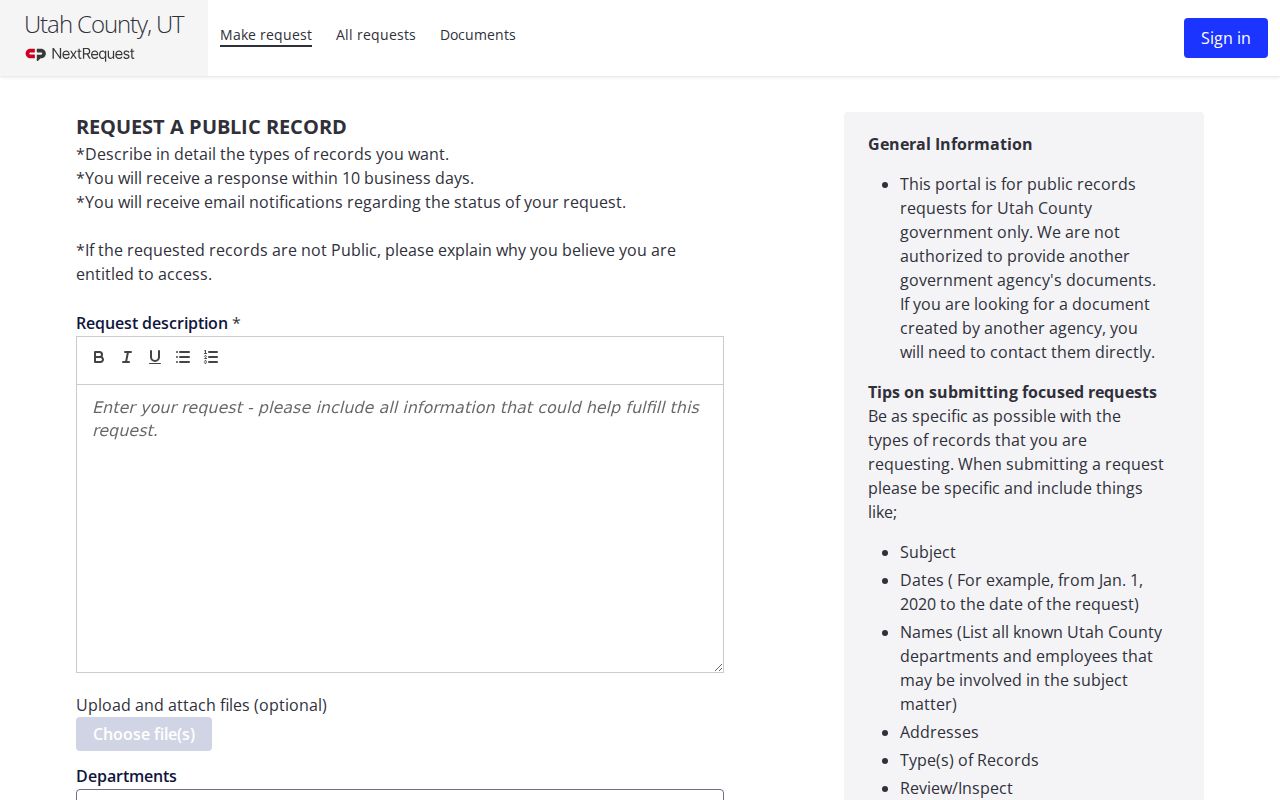
The portal is the broad agency-record fallback, but it does not replace a court request. Sheriff reports now start at $15 on the live records page, and body or dash video has a $20 per-case base plus staff time. Older Sheriff pages still show $5 report figures. Confirm the current charge before paying. The Records Office is at 3075 North Main in Spanish Fork, with help at 801-851-4500.
Sealed, Expunged, and Restricted Records
For a Utah County record, Utah expungement restricts or denies ordinary public inspection; it does not destroy every record. BCI moves an expunged charge out of ordinary history and into a restricted file after it receives a signed order. Petition-based relief begins with a BCI certificate application. The certificate costs $65, and each eligible conviction, plea in abeyance, or special certificate adds another $65. BCI estimates one to two months and offers no expedite.
The BCI expungement page sets out the current petition path and its limits.
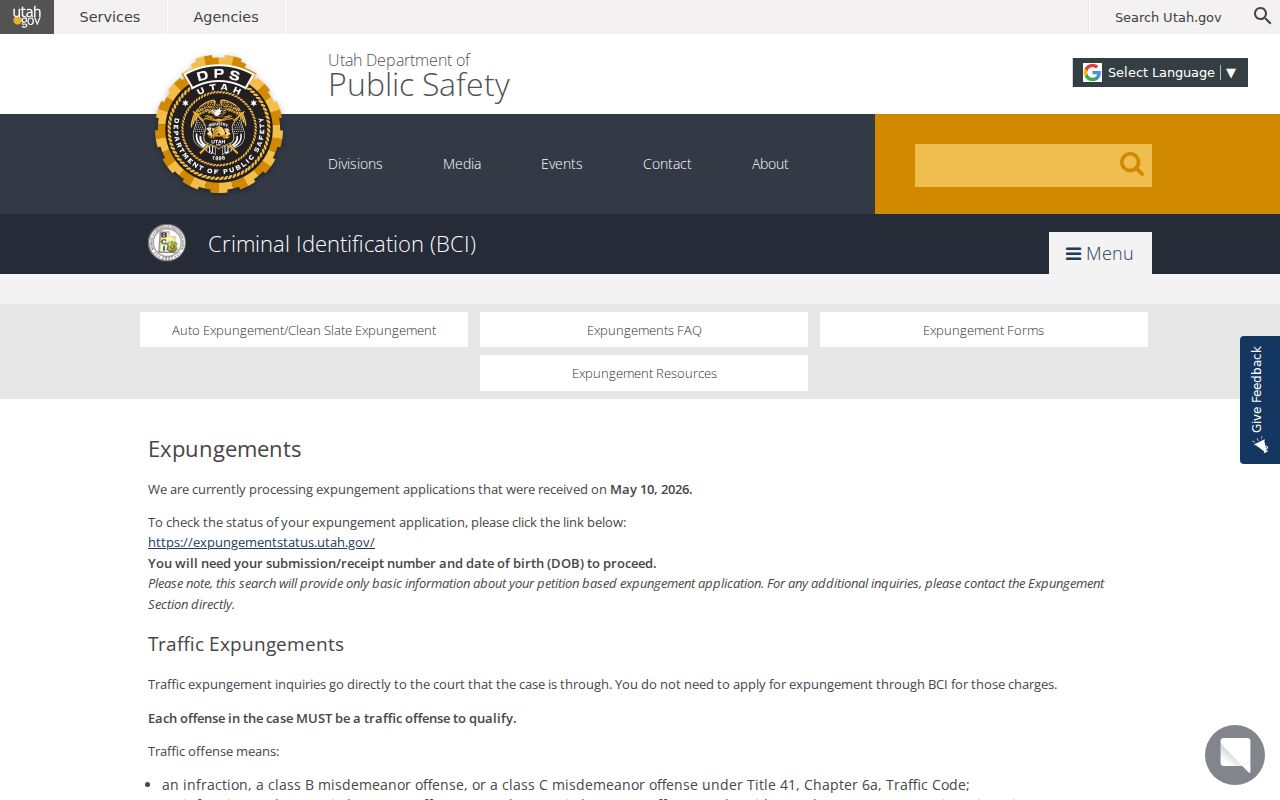
After the certificate, the request moves to the court. The district filing fee is $150 under the fee schedule effective May 6, 2026, though a waiver may be possible. A certificate does not guarantee an order, and a prosecutor or victim may object. Clean Slate is different: courts and BCI initiate automatic processing for eligible matters without the applicant certificate route, but BCI promises no finish date.
Utah County Warrant Verification
The Sheriff routes public users to the Utah State Warrants Search instead of claiming a complete county-only list. A person trying to resolve their own warrant can also call Utah County warrant specialists at 801-851-4065 or 801-851-4034, email warrants@utahcounty.gov, or contact the issuing court. Xchange and MyCase may show the case in which a bench warrant arose, subject to access limits.
The Utah County Sheriff warrant page gives the official search and help routes.
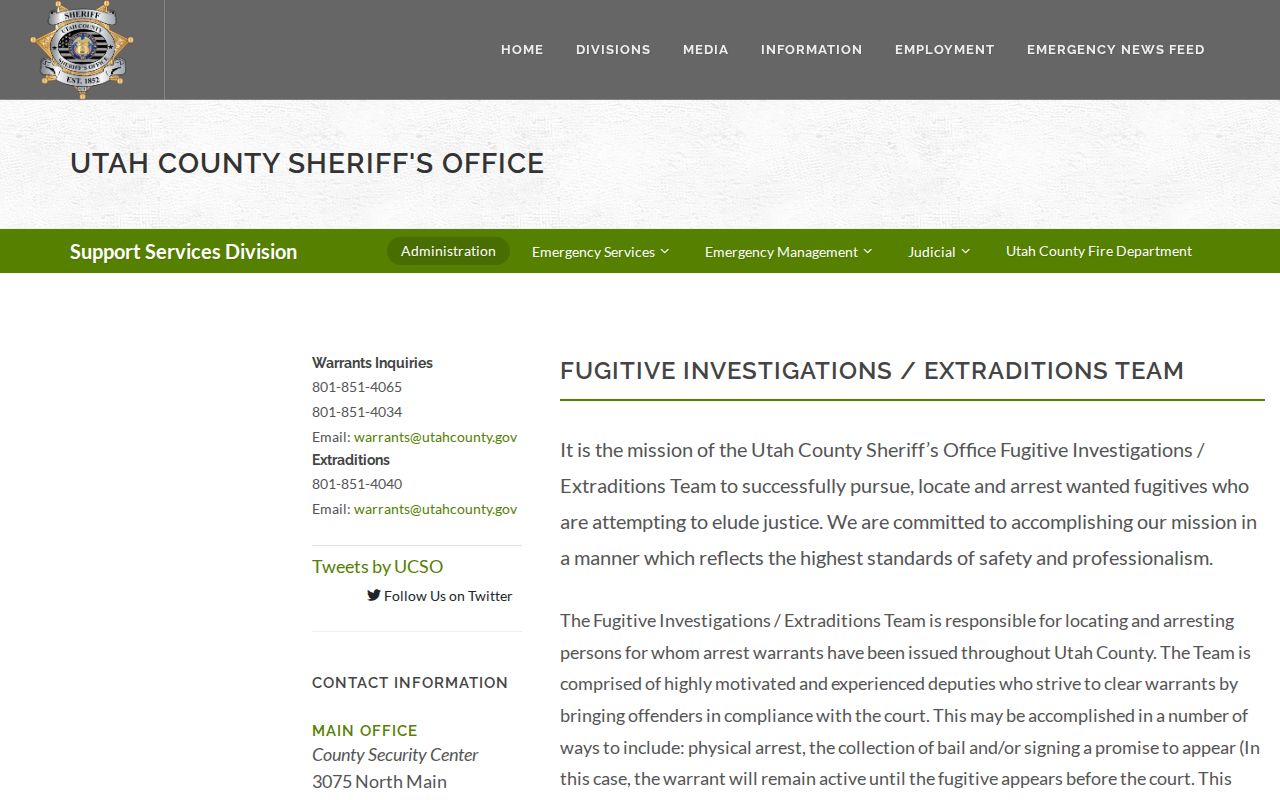
A promise to appear does not necessarily clear the warrant at once; the Sheriff warns it may remain active until the court appearance. Jail codes such as WA or WBW show that a warrant affected a booking, but they are not a sound way to prove whether a warrant remains active today.
Utah County Custody After Sentencing
County jail and state corrections searches cover different populations. The Utah County Jail commonly holds people before trial and during shorter county custody. After a state sentence or transfer, the UDC Offender Search can show people in current Utah Department of Corrections custody or supervision. It should not be used to search an ordinary pretrial county detainee.
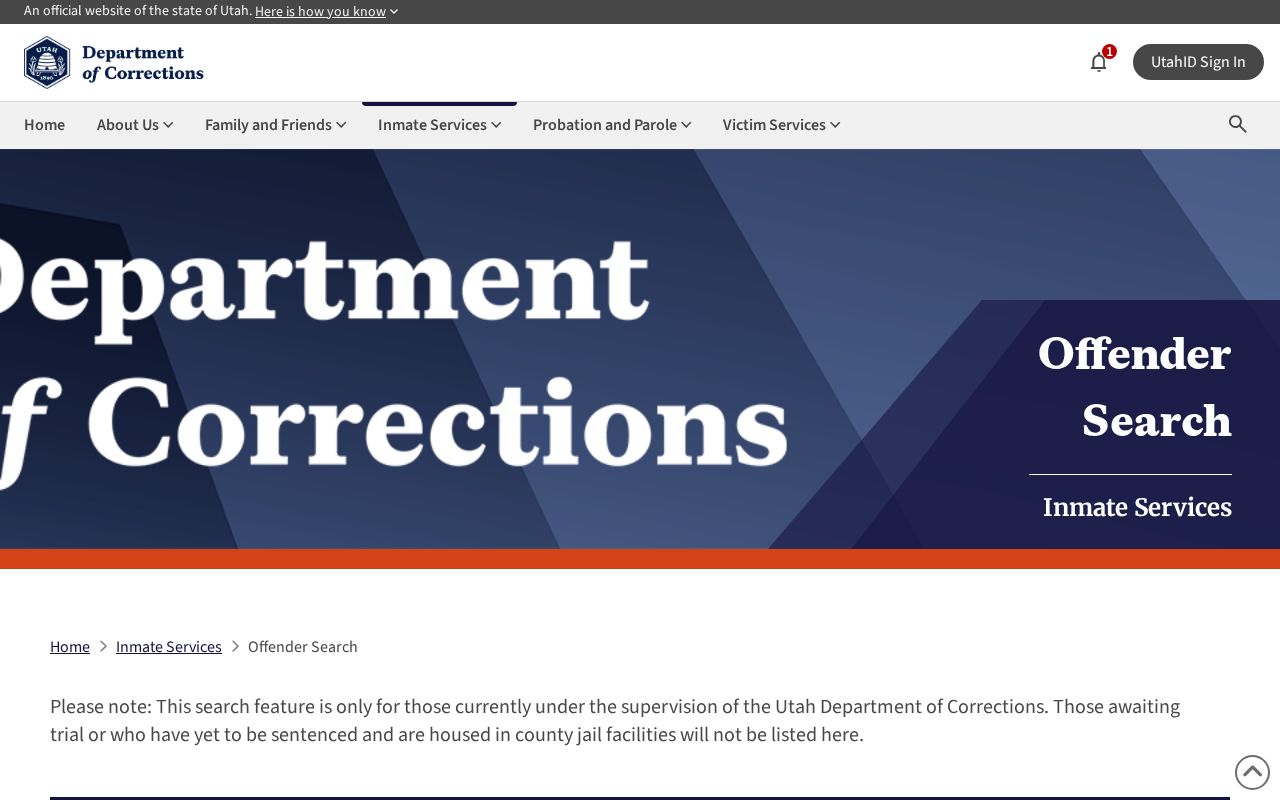
Adult felony probation and parole are state-run through UDC Adult Probation and Parole. The Utah Board of Pardons and Parole decides release and revocation matters. Its search accepts names, an offender number, or a date range and searches aliases, but pop-ups must be enabled.
The Board hearing and decision search is the official decision-history layer.
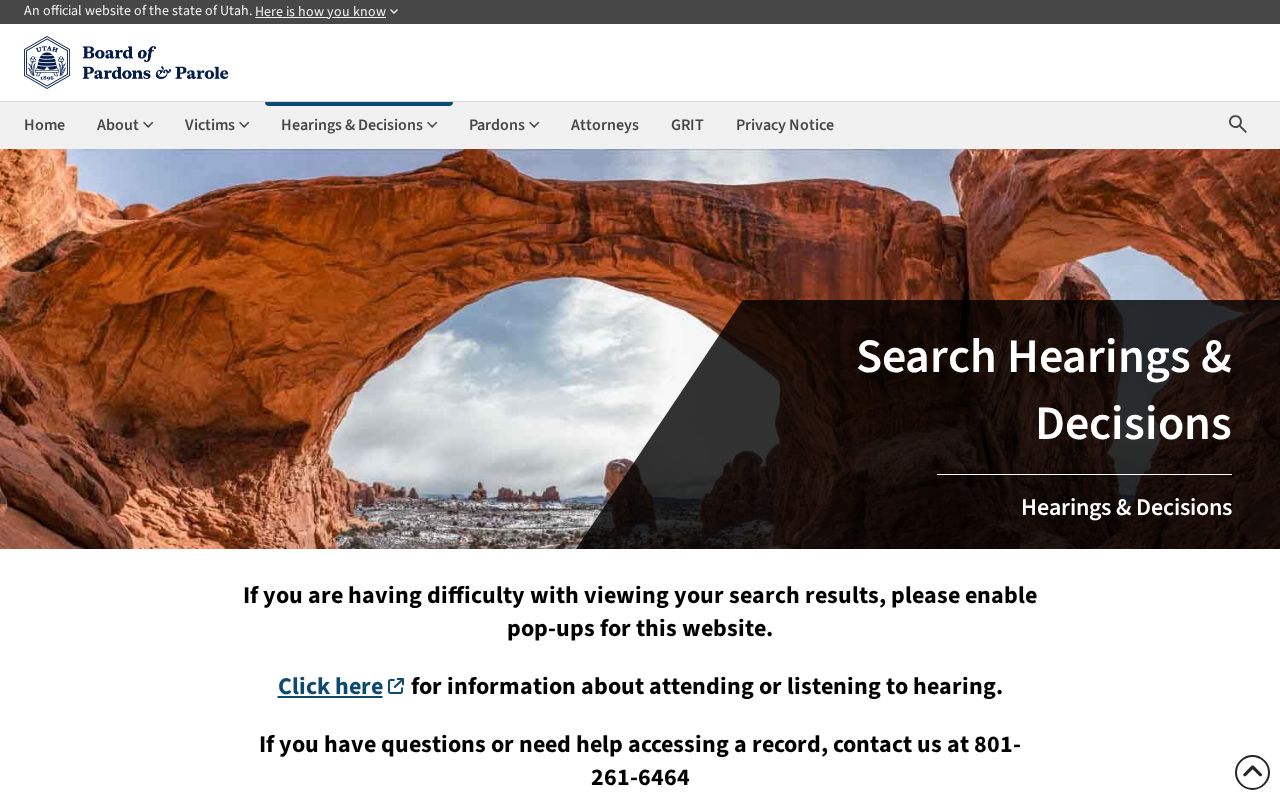
The Board warns that VINELink technical issues can cause missing or inaccurate notices. Verify a parole result through the Board at 801-261-6464 when accuracy matters.
Utah County Counts Need Context
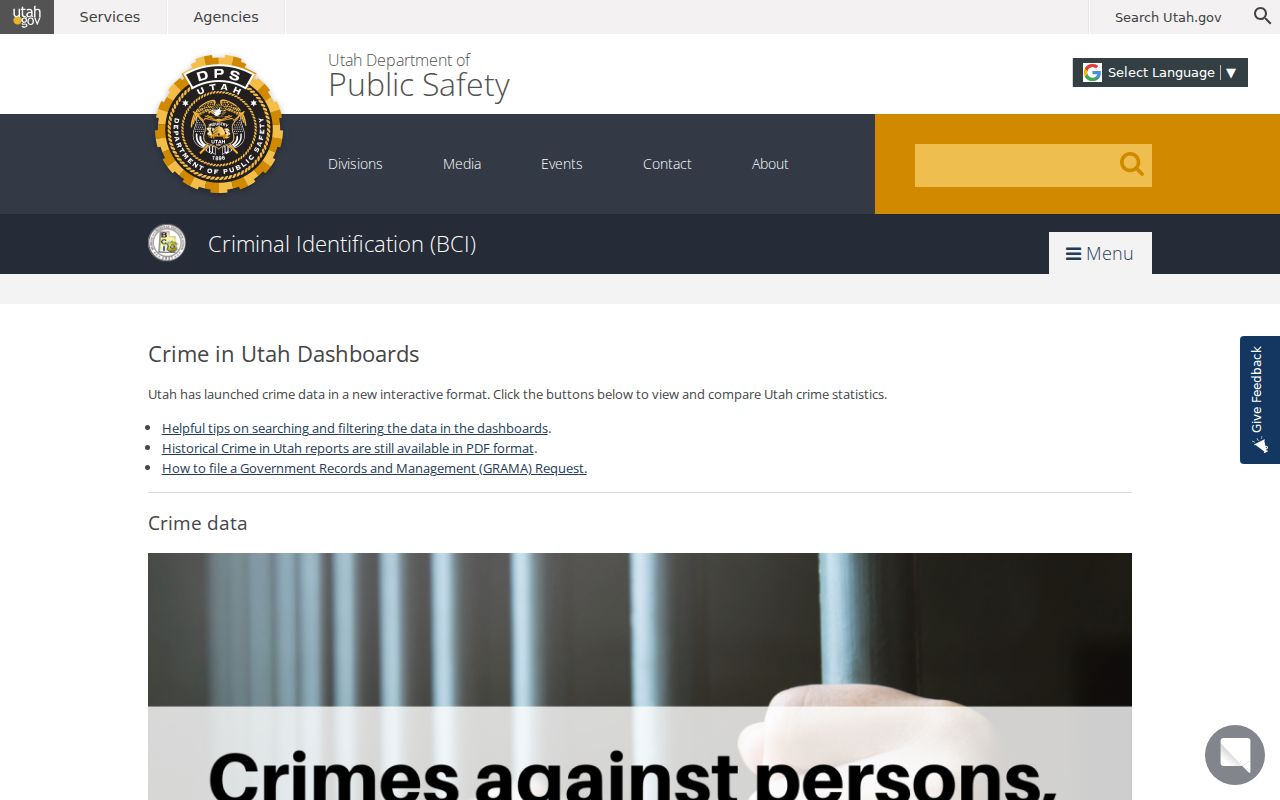
BCI’s Crime in Utah dashboards use NIBRS, which counts each reported offense within an incident. An offense count is not a count of people, arrests, filed charges, or convictions. Since 2021, Utah agencies have been required to report in NIBRS, yet a blank or low total can still reflect nonreporting. The denominator can also differ from a Census place estimate.
The official Crime in Utah dashboards provide county and city filters with those method cautions.
The same care applies to the prosecutor’s role. The Utah County Attorney screens allegations and files eligible district and county justice cases; an arresting officer’s intake charge is not the prosecutor’s final choice.
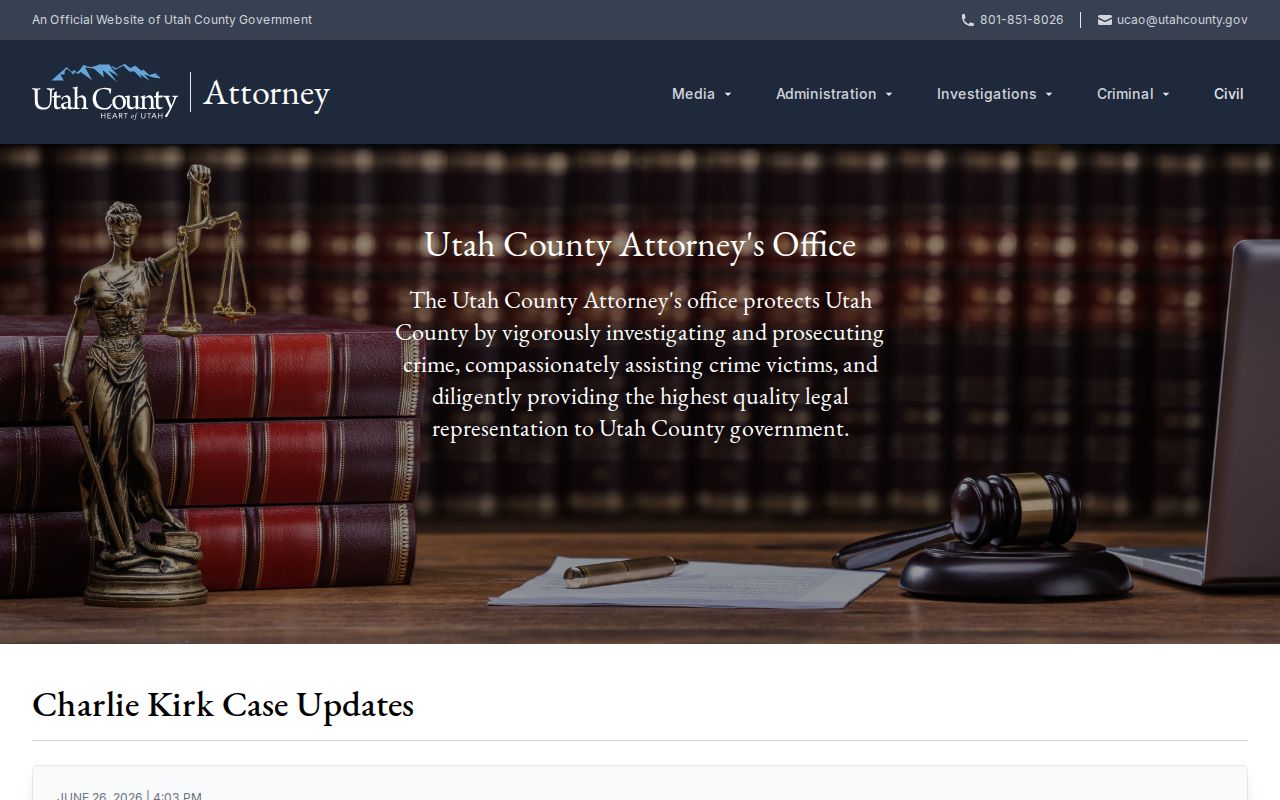
For Utah County criminal history, the safest chain is event, arrest or citation, prosecutor filing, court disposition, and any later custody or supervision. Skipping a stage can turn one official number into the wrong claim.
Utah County Criminal Records by City
Utah County’s three largest incorporated cities are Provo, Orem, and Lehi based on the July 1, 2024 Census estimates. Their police departments hold city incident reports, while their justice courts handle many class B and C misdemeanor and traffic matters. A custodial arrest may still create a Sheriff booking in Spanish Fork, and a felony or class A case moves to Fourth District Court.
Provo Criminal Records
115,479 residents. Provo Police uses its own GRAMA channel, and Provo Justice Court keeps local lower-level cases.
Orem Criminal Records
96,646 residents. Orem has a police request form and a narrow future-date Justice Court calendar.
Lehi Criminal Records
93,446 residents. Lehi Police publishes a detailed GRAMA form and media fee method.
Each city route remains one part of the Utah County criminal record trail. Follow city reports to the Sheriff for a county booking and to the proper justice or district court for the filed outcome.